
Good Conflict vs. Bad Politics: Why Your Team Needs to Argue More

Think back to the last meeting you led. You introduced a new strategy, asked for feedback, and were met with polite nods and silence. You assumed everyone was on board, right?
Fast forward two weeks, and the project is stalling. It turns out, half the room thought it was a terrible idea, but nobody said a word.
Welcome to the second tier of Patrick Lencioni’s The Five Dysfunctions of a Team: The Fear of Conflict.
When a team lacks trust (which we covered in [link to the previous blog with title here), the very first thing to vanish is honest, unfiltered debate. What fills the void isn't peace—it's office politics.
The Trap of "Artificial Harmony"
Many leaders mistake a quiet, polite room for a harmonious one. But there is a massive difference between genuine alignment and artificial harmony.
Artificial harmony is a defense mechanism. It occurs when team members don't feel safe enough to speak their minds, so they default to safe, agreeable platitudes.
When you avoid healthy, constructive conflict, the disagreement doesn't magically disappear. It just goes underground. It turns into back-channel politics, water-cooler venting, and passive-aggressive behavior.
Ironically, by trying to protect people’s feelings and avoid discomfort, you create an environment that is far more toxic than a loud, passionate debate ever would be.
Where Does Your Team Sit? The Conflict Continuum
Conflict exists on a spectrum. The goal of a high-performing team isn't to eliminate conflict, but to position it perfectly on the Conflict Continuum.
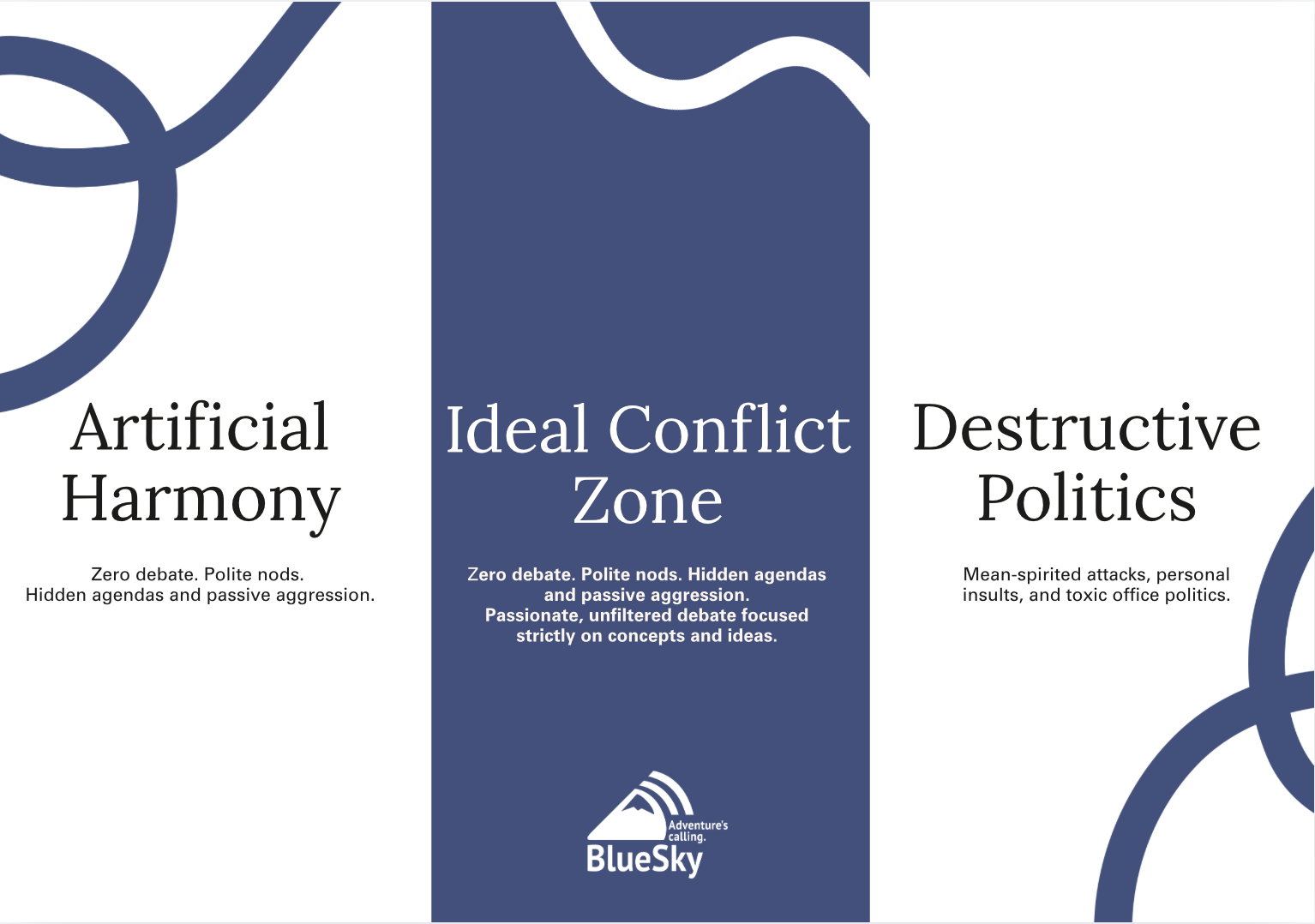
Great teams actively push toward the Ideal Conflict Zone. They argue passionately about concepts, strategies, and ideas—never about personalities or egos. Once the meeting is over, they leave the room with zero residual bitterness because they know the debate was driven by a shared desire to find the best solution.
Actionable Tool: How to Start "Mining for Conflict"
If your team is trapped in artificial harmony, you can't just yell, "Alright everyone, start arguing!" You have to build the bridge for them.
Here is a simple, actionable tool Lencioni suggests called Mining for Conflict.
1. Assign a "Miner"
At your next meeting, assign one person (or take on the role yourself as the leader) to act as the Conflict Miner. Their sole job is to look for signs of hidden disagreement.
2. Watch for Body Language
Look for crossed arms, eye rolls, heavy sighs, or sudden silence from someone who is usually vocal. These are red flags that someone disagrees but is withholding their opinion.
3. Force the Issue
When you spot a red flag, call it out gently but directly. Use phrases like:
"Hey Sarah, you looked a little skeptical when we talked about the timeline. What are we missing?"
"Carlos, I noticed you got quiet. Give us the counterargument to this plan."
4. Give "Real-Time Permission"
This is the most crucial step. When someone finally speaks up with a controversial or opposing view, reward them immediately. Interrupt the tension by saying: "Thank you for saying that, John. That’s exactly the kind of perspective we need to hear right now." This reinforces that conflict is safe and valued.
The Bottom Line
You cannot have true commitment without conflict (which we will dive into next week). If people don't weigh in, they won't buy in.
Healthy teams realize that a messy, passionate, respectful argument is the fastest way to get to the truth. Stop playing nice, and start pushing for the truth.
💬 What do you think?
What is your team’s relationship with conflict? Are you swimming in artificial harmony, or do you have a team that knows how to duke it out constructively?